In this story
Quick facts
- Place
- Ajrakhpur and Dhamadka, Kutch, Gujarat
- Started from
- Brought from Sindh; over four hundred years in Kutch
- Made by
- Khatri block printers
- Worn now as
- Printed cotton chaniyas and dupattas for hot nights
- block print
- indigo
- cotton
- kutch
Ajrakh is the deep blue, red and black block-printed cloth of Kutch, and of Sindh across the border. It is printed by the Khatri community, whose families have done this work for generations, first in the village of Dhamadka and, since the earthquake of 2001, also in a village they built for the purpose and named Ajrakhpur.
The name
Two explanations are told. One is that it comes from azrak, the Arabic and Persian word for blue, the colour that defines the cloth. The other is aaj rakh — keep it today — because a good ajrakh is worn for years and gets better. Both are probably true in spirit.
How it is made
Ajrakh is a resist print, and it is slow. The cotton is washed, then treated with myrobalan, a fruit that makes it take dye. Outlines are printed with a lime and gum paste that resists dye. A mordant printed with another block fixes red where it lands. The cloth goes into indigo, comes out, is washed, goes into a madder bath for the reds, is washed in the river, and is laid out in the sun. Some steps are repeated. A traditional ajrakh passes through fourteen to sixteen stages and takes two to three weeks, and the finest are printed on both sides so exactly that the pattern lines up front to back.
The blocks are carved from teak by hand, and the patterns are geometric — stars, trefoils, lattices — in the Islamic tradition, because the craft came with traders and settlers from the west.
Colours
Natural indigo for blue. Madder root and alizarin for red. Iron and jaggery for black. The colours sit inside the fibre rather than on top of it, which is why old ajrakh looks lived in rather than faded.
Wearing it
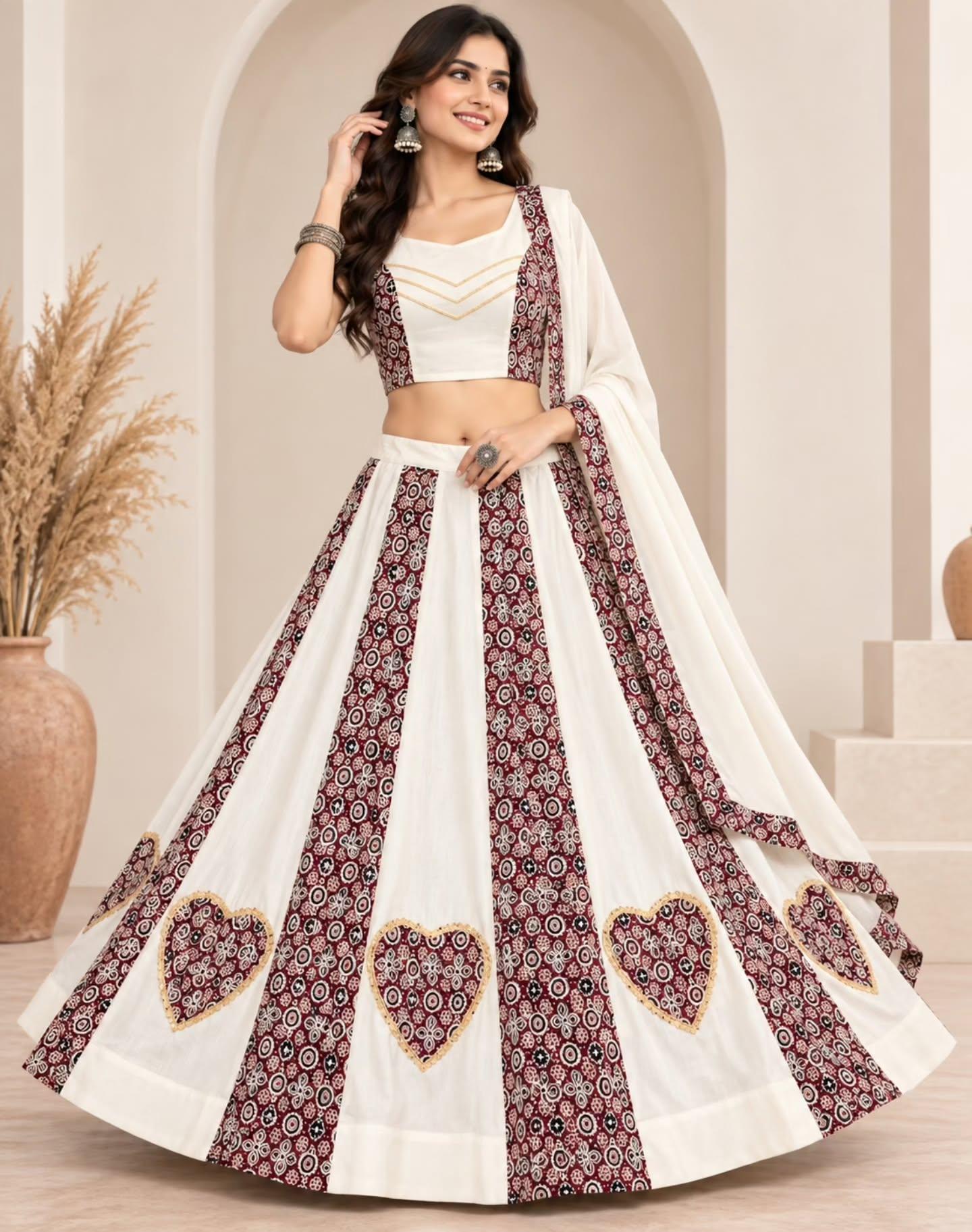
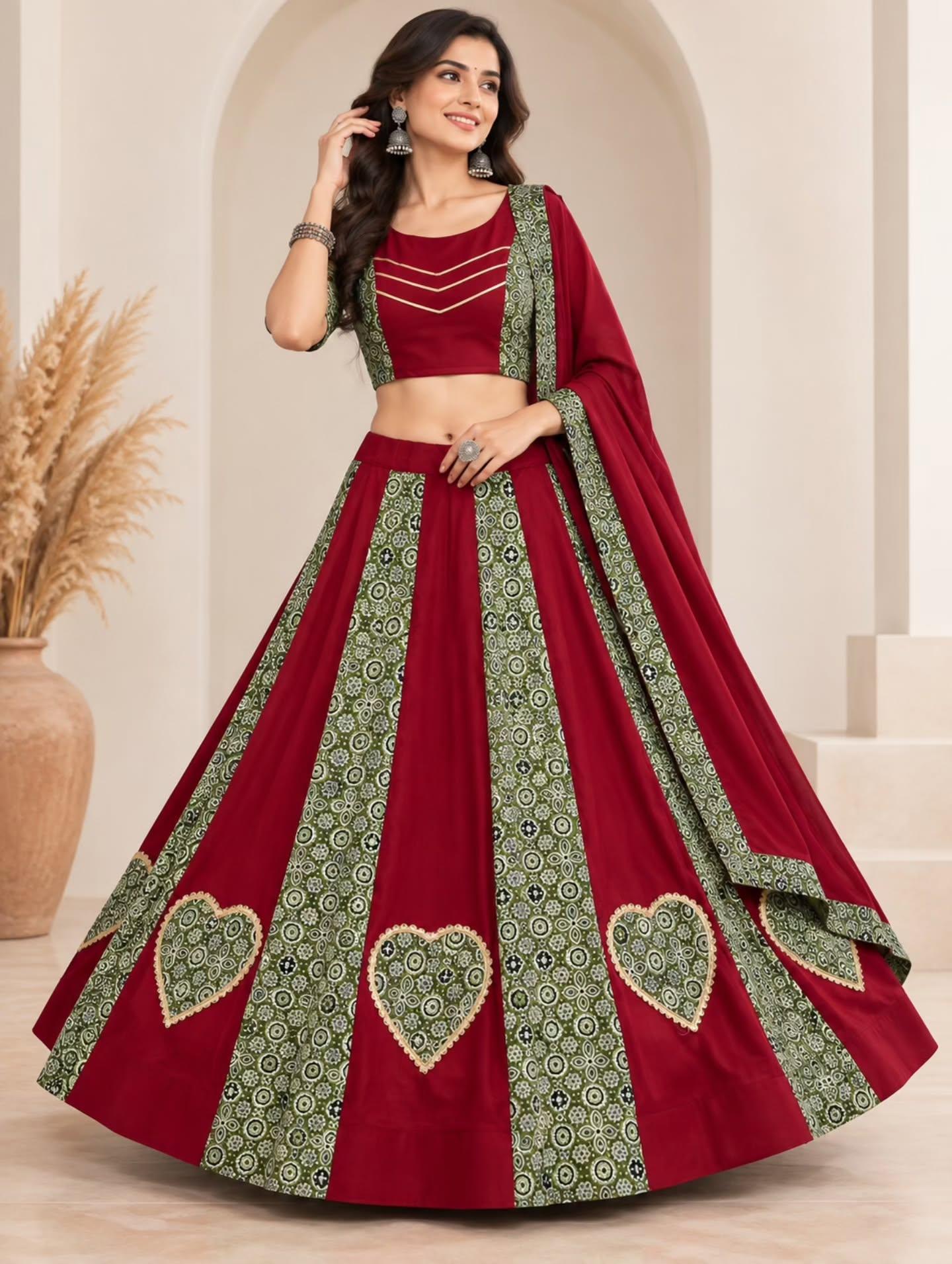
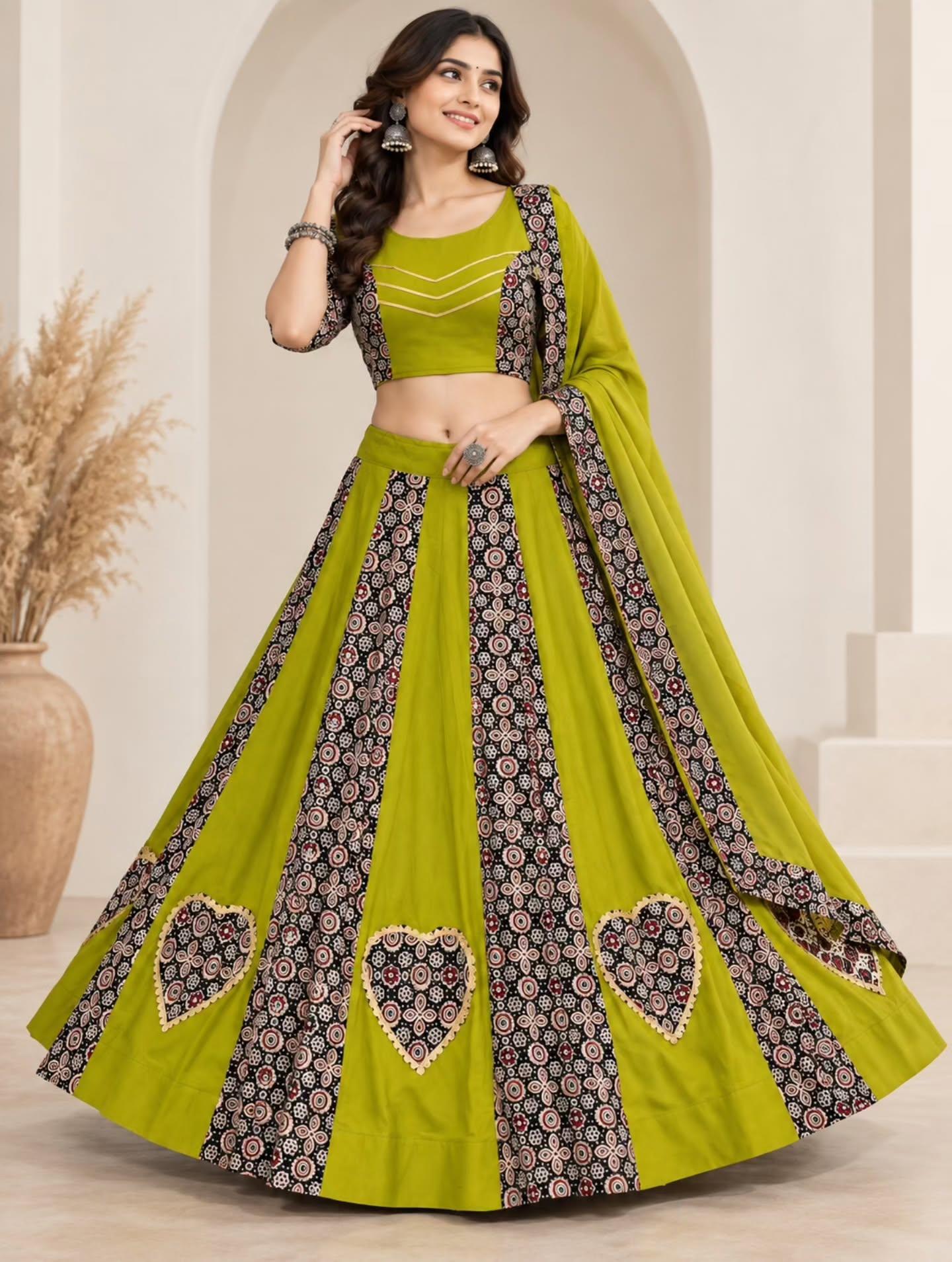
Ajrakh is cotton, and at its best in heat. A printed chaniya or a dupatta in ajrakh over a plain choli is one of the few Navratri looks that stays cool at eleven at night. Wash it cold, alone, the first few times.
Questions people ask
What is ajrakh?
A hand block-printed cotton from Kutch (Gujarat) and Sindh, in deep indigo, madder red and black, made with natural dyes and resist pastes over fourteen to sixteen stages.
Where is ajrakh made?
Ajrakhpur and Dhamadka in Kutch, Gujarat, by Khatri families, and across the border in Sindh, Pakistan.
How do I wash ajrakh?
Cold, alone, by hand for the first few washes, and dry in shade. Natural dyes soften over time rather than fade.
Is ajrakh good for summer?
Yes. It is cotton and it is printed for heat; an ajrakh chaniya or dupatta is one of the coolest Navratri fabrics.