Quick facts
- Place
- Kutch, Gujarat
- Started from
- Centuries old; stitched for trousseaus long before it was sold
- Made by
- Rabari, Ahir, Mutwa, Jat and Meghwal women
- Worn now as
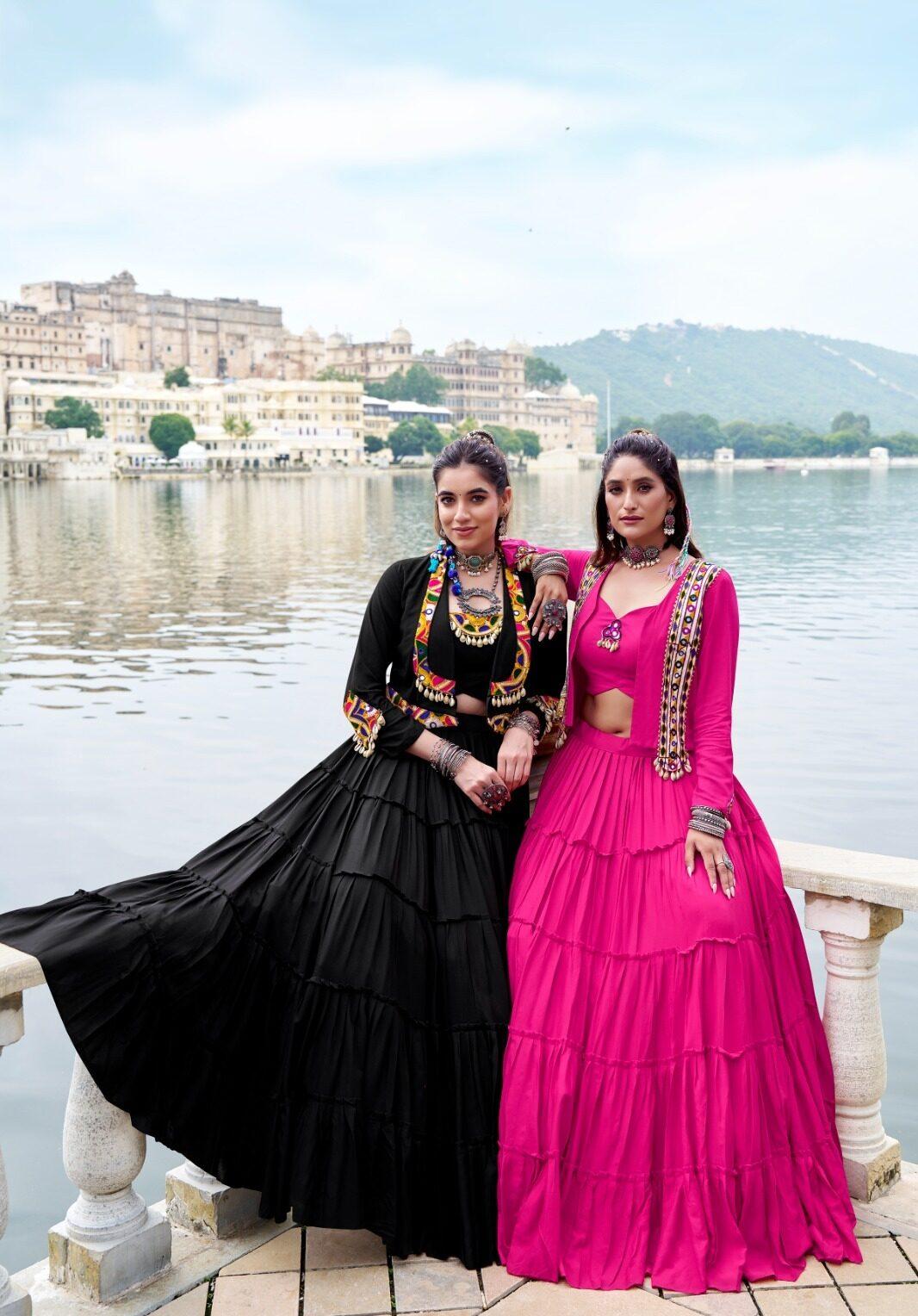
- Mirror-work cholis and kotis for Garba
- mirror work
- embroidery
- navratri
- kutch
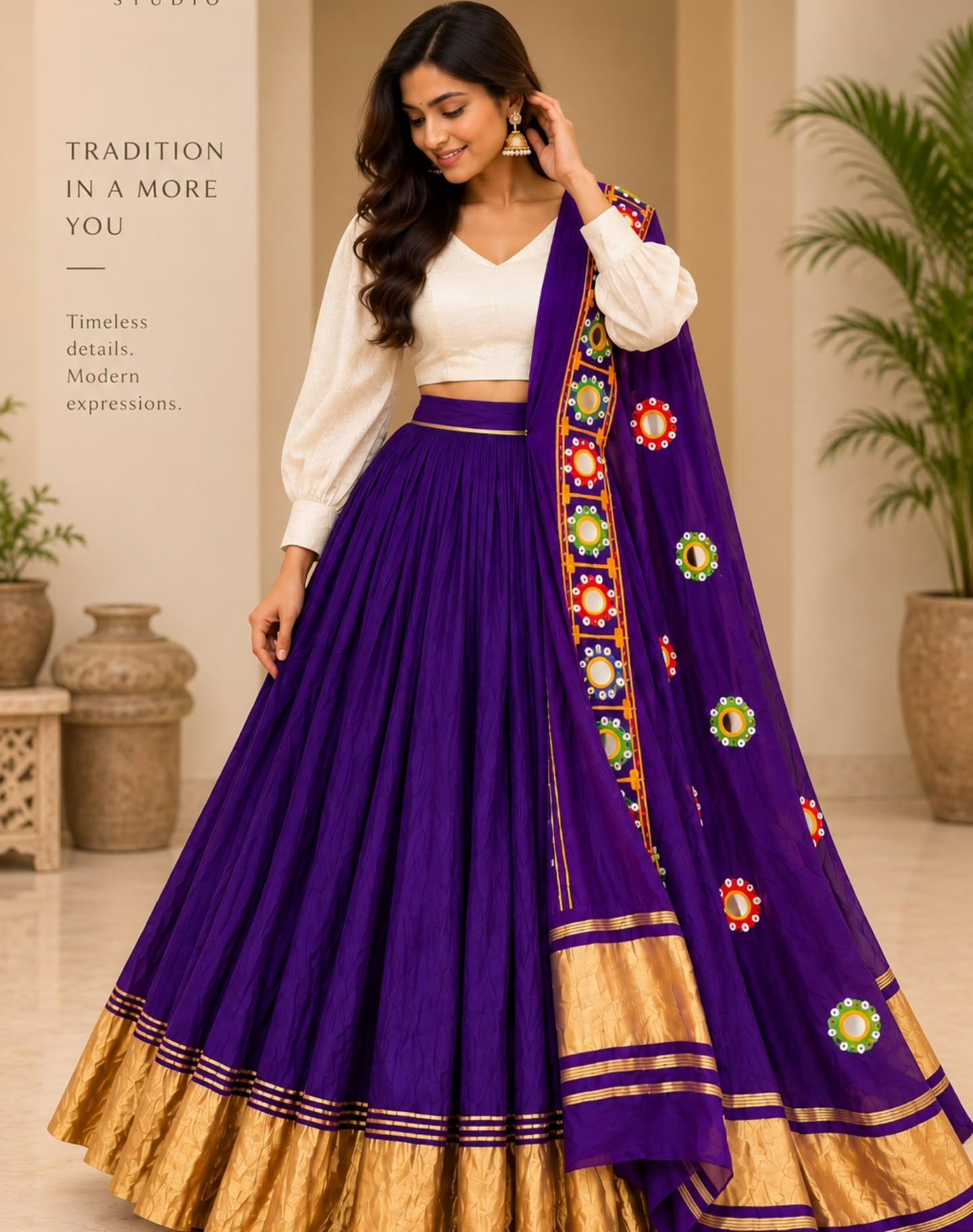
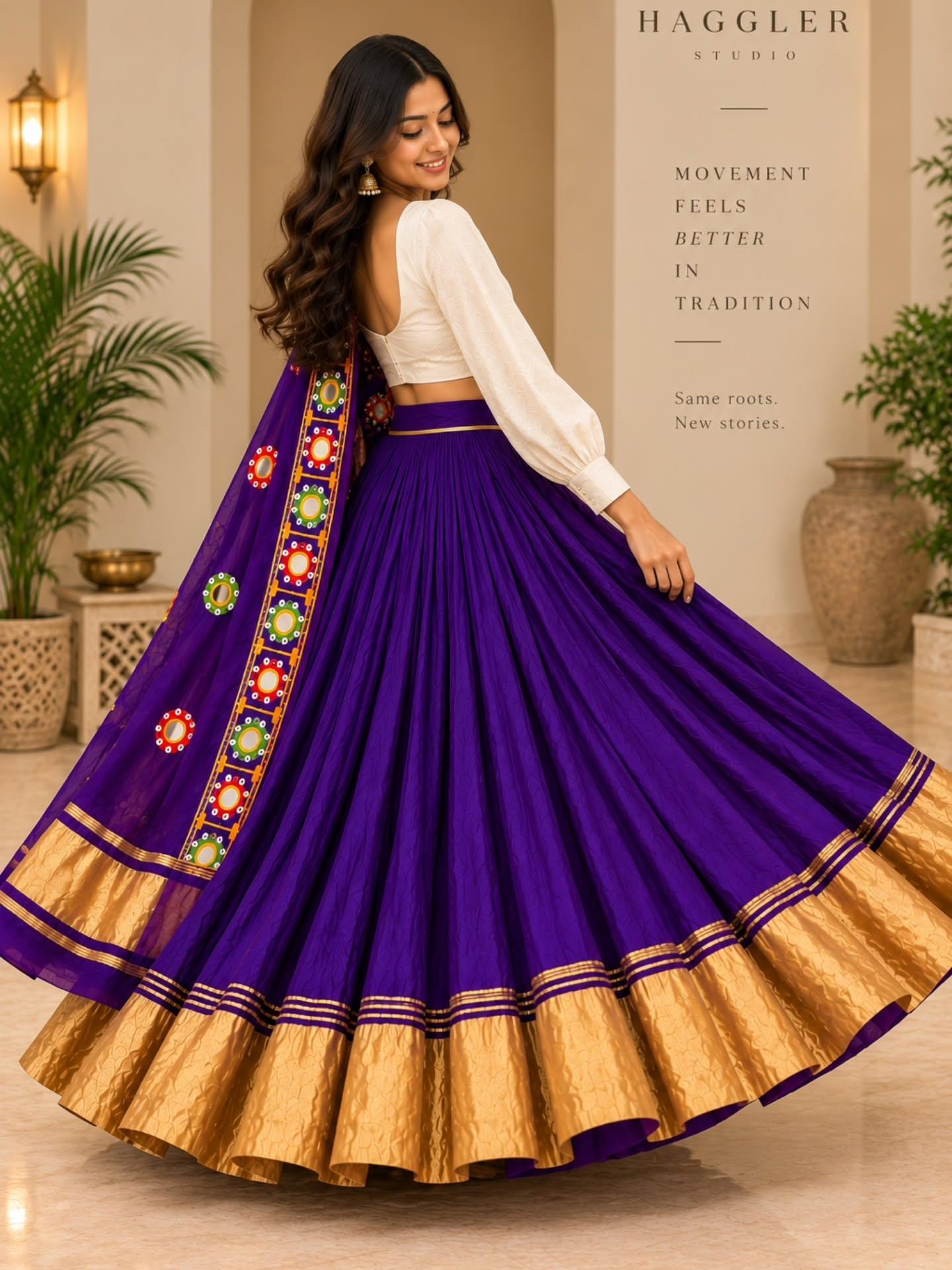
The embroidery most people picture when they think of a Navratri choli — bright thread packed tight, small mirrors catching the light — comes from Kutch, the district at the western edge of Gujarat that borders Sindh and the Rann.
Who stitches it
Kutchi embroidery is not one style but a family of them, each belonging to a community. The Rabari, who are traditionally herders, work in bold chain stitch with big mirrors and strong outlines. The Ahir use finer chain stitch and smaller mirrors with a lot of flowers. The Mutwa, from the villages of Banni, are known for the tiniest mirrors and the finest stitching of all. The Jat, Sodha and Meghwal communities each have their own vocabulary too. A trained eye can tell where a piece was made from the stitch alone.
For generations this work was not made to sell. Girls stitched their own trousseau over years: cholis, skirts, bags, quilts, animal trappings. The pieces sold today on cholis, kotis and dupattas descend from that tradition.
The mirror
The mirror is called abhla. Each one is held down by a ring of buttonhole or herringbone stitch, worked densely enough that the glass cannot slip out. Traditionally the mirrors were cut from blown glass and were slightly uneven; modern ones are machine-cut and uniform. Either way, the thread ring is what to look at: on hand work it is thick and a little irregular, on machine work it is thin, perfectly even, and often the mirror is glued or is a plastic disc.
How to spot hand work
- Turn the piece over. Hand embroidery shows knots and thread crossings on the back; machine work shows a neat continuous chain.
- Look for small imperfections. Two flowers will not be identical.
- Feel the weight. Hand-stitched mirror panels are heavier than they look.
Wearing and caring for it
A fully embroidered choli is a piece of clothing you do not fold; store it flat or rolled with tissue. Dry-clean only, and keep perfume off the mirrors — alcohol dulls them. Everything with mirror work in the studio is fitted before it leaves, because the weight of the embroidery sits differently on every body.
Questions people ask
What is Kutchi embroidery?
Hand embroidery from Kutch district in Gujarat: dense chain, herringbone and buttonhole stitches in bright thread, usually with small mirrors (abhla) held down by a ring of stitching. Each community — Rabari, Ahir, Mutwa, Jat, Meghwal — has its own style.
How can I tell hand-done Kutchi work from machine embroidery?
Turn it over. Hand work shows knots and crossed threads on the back and small differences between repeated motifs; machine work has a neat continuous chain on the back, identical motifs, and mirrors that are often glued or plastic.
How do I wash a mirror-work choli?
Dry-clean only. Store it flat or rolled in tissue rather than folded, and keep perfume and deodorant off the mirrors, which dull with alcohol.
Is Kutchi embroidery the same as gamthi work?
They overlap. Kutchi names the district and its community styles; gamthi means village-style and covers the wider folk look of rural Gujarat, of which Kutchi work is the best-known part.