Quick facts
- Place
- Saurashtra and Kutch, Gujarat
- Started from
- Village trousseau embroidery, generations old
- Made by
- Rural Gujarati women
- Worn now as
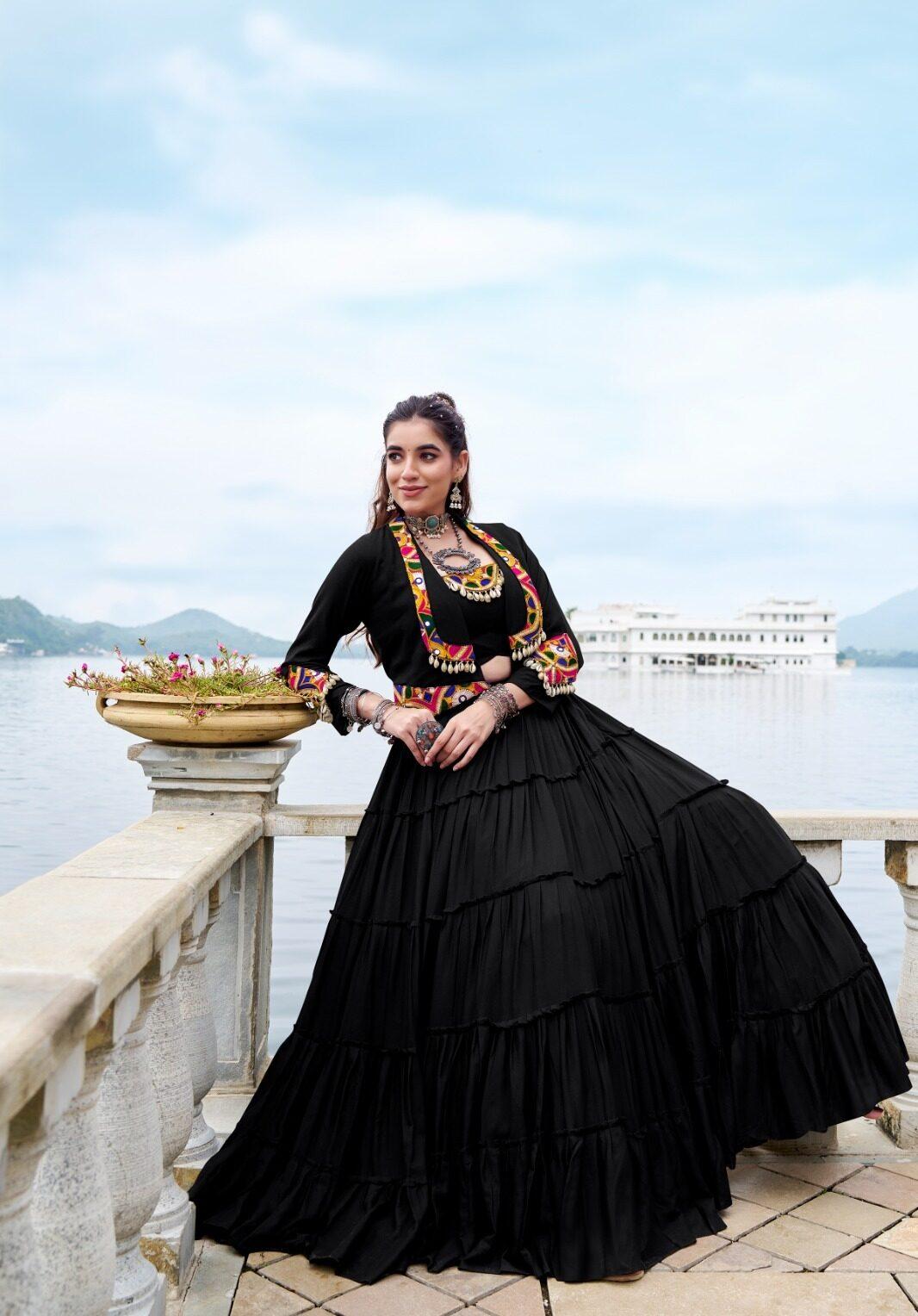
- The gamthi koti over a plain choli
- gamthi
- koti
- embroidery
- garba
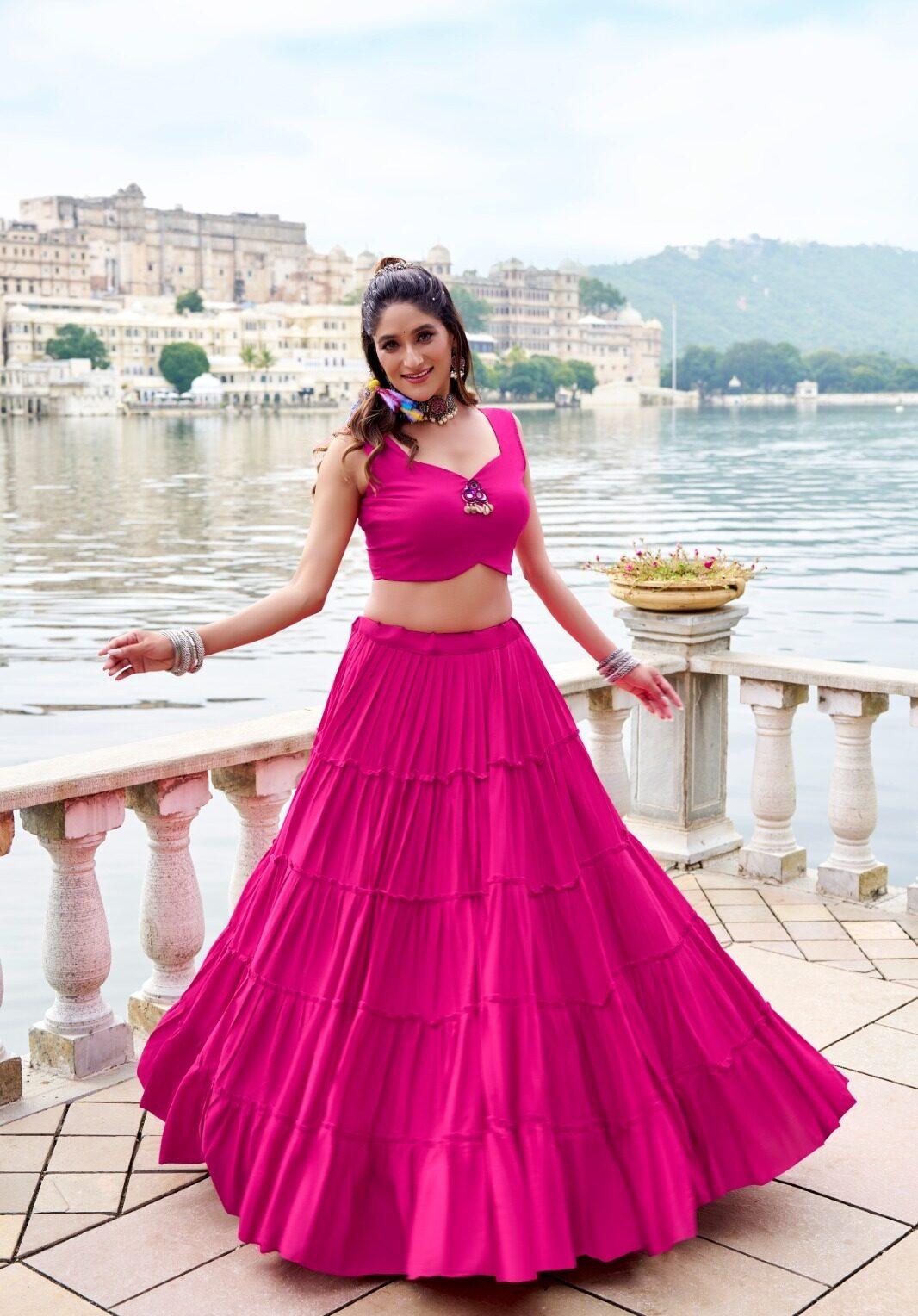
Gam is the Gujarati word for village. Gamthi means village-made, rustic, of the countryside — and when it is said of clothing it means the bright, hand-embroidered look of rural Saurashtra and Kutch: dense thread work, mirrors, tassels, and colours that do not apologise.
Gamthi and Kutchi
The two words overlap and people use them loosely. Kutchi embroidery names a place and a set of community styles. Gamthi names a look: the folk aesthetic of the whole western Gujarat countryside, of which Kutchi work is the most famous part. A gamthi choli might carry Kutchi stitches, Saurashtrian patchwork, cowrie shells, pom-poms, or all of them at once. If it looks like it was made for a village fair rather than a city wedding, it is gamthi.
What you will see it on
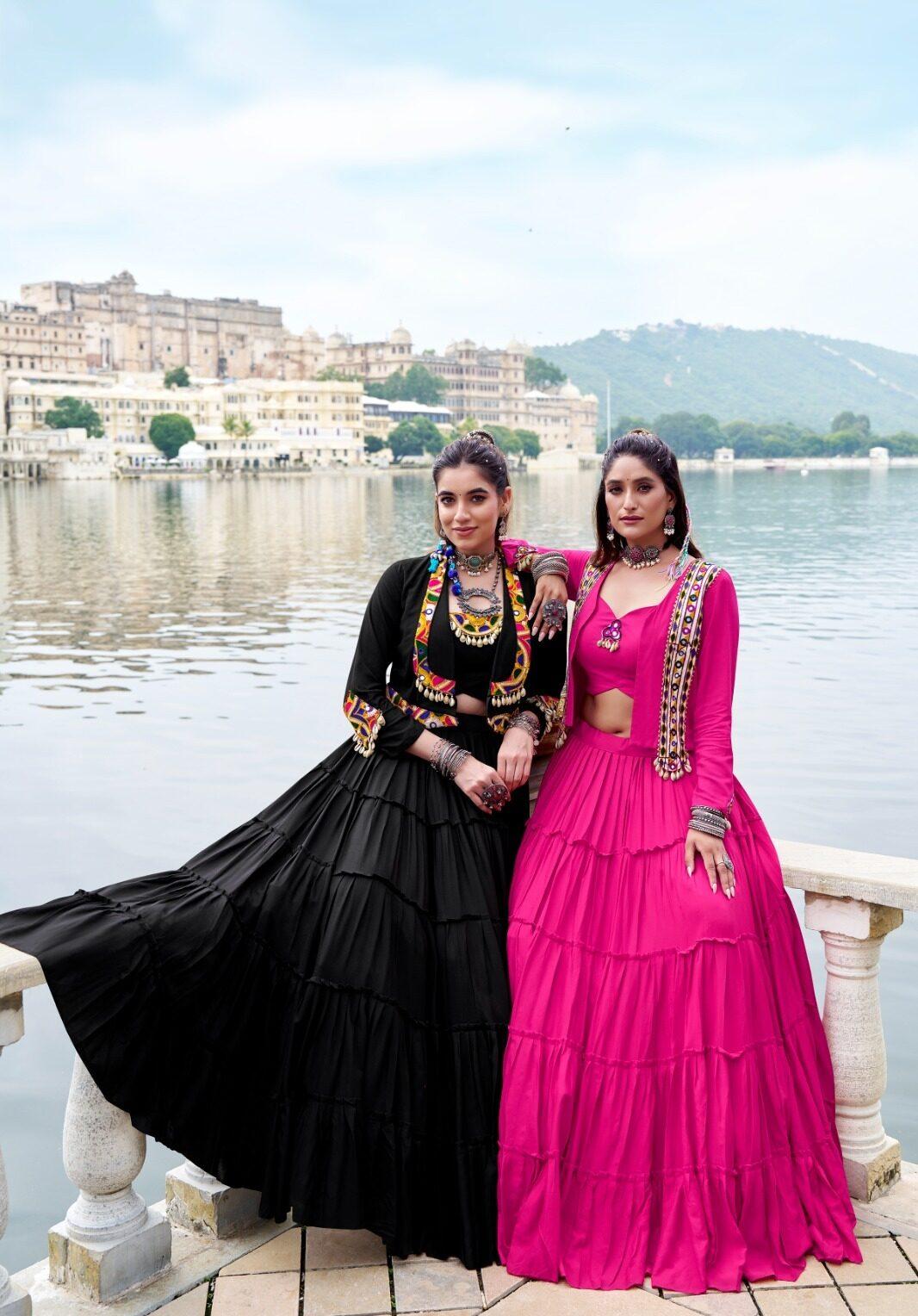
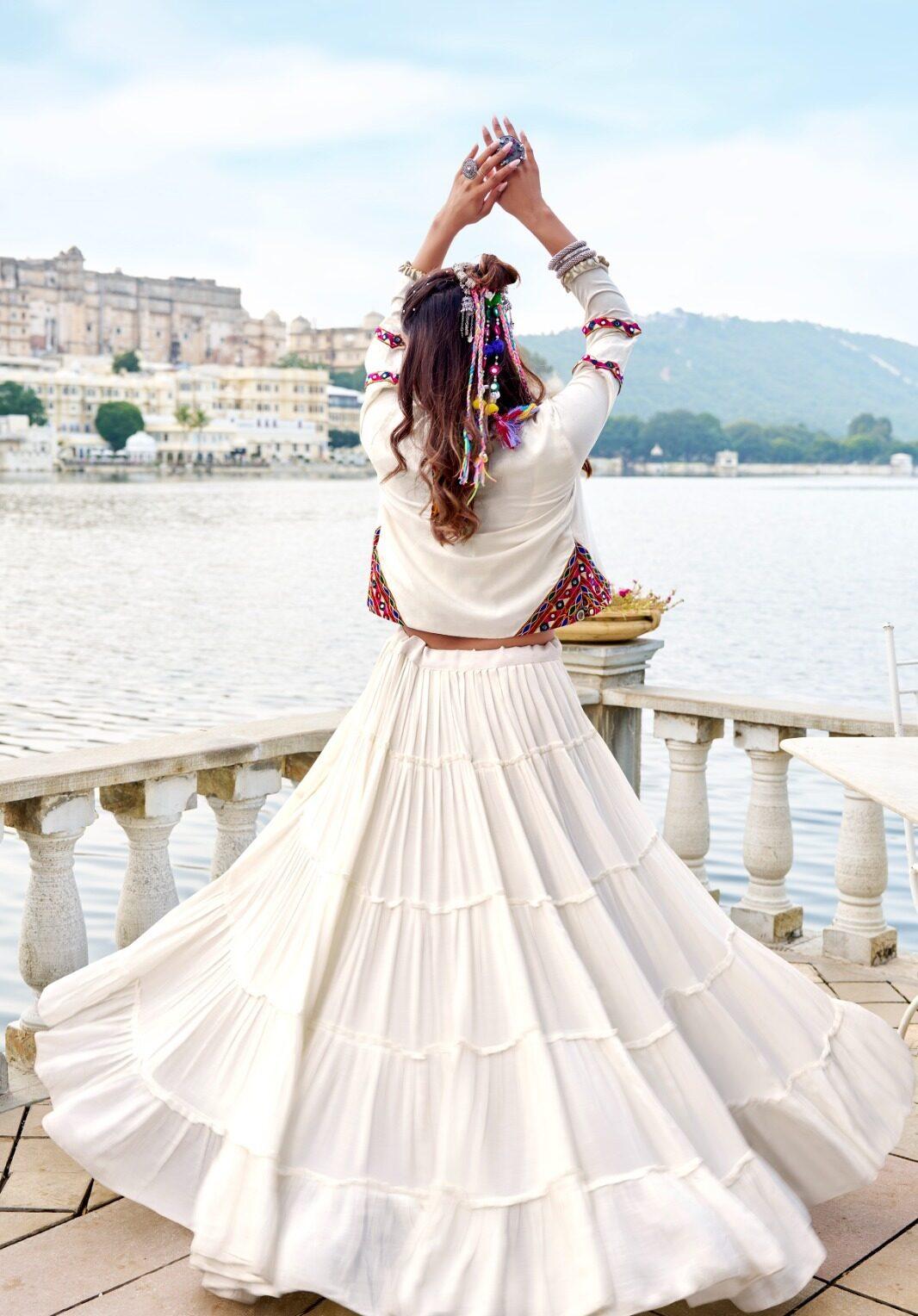
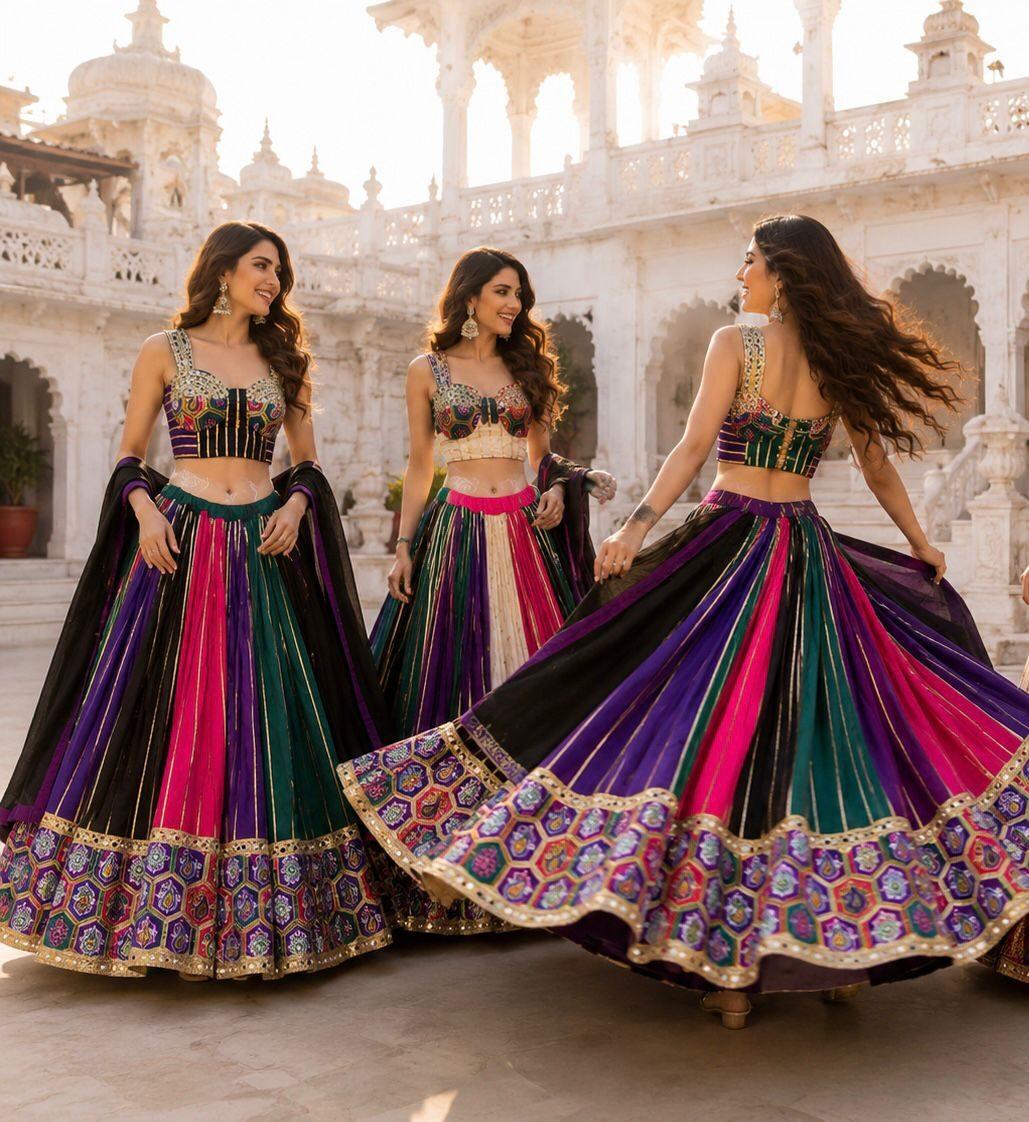
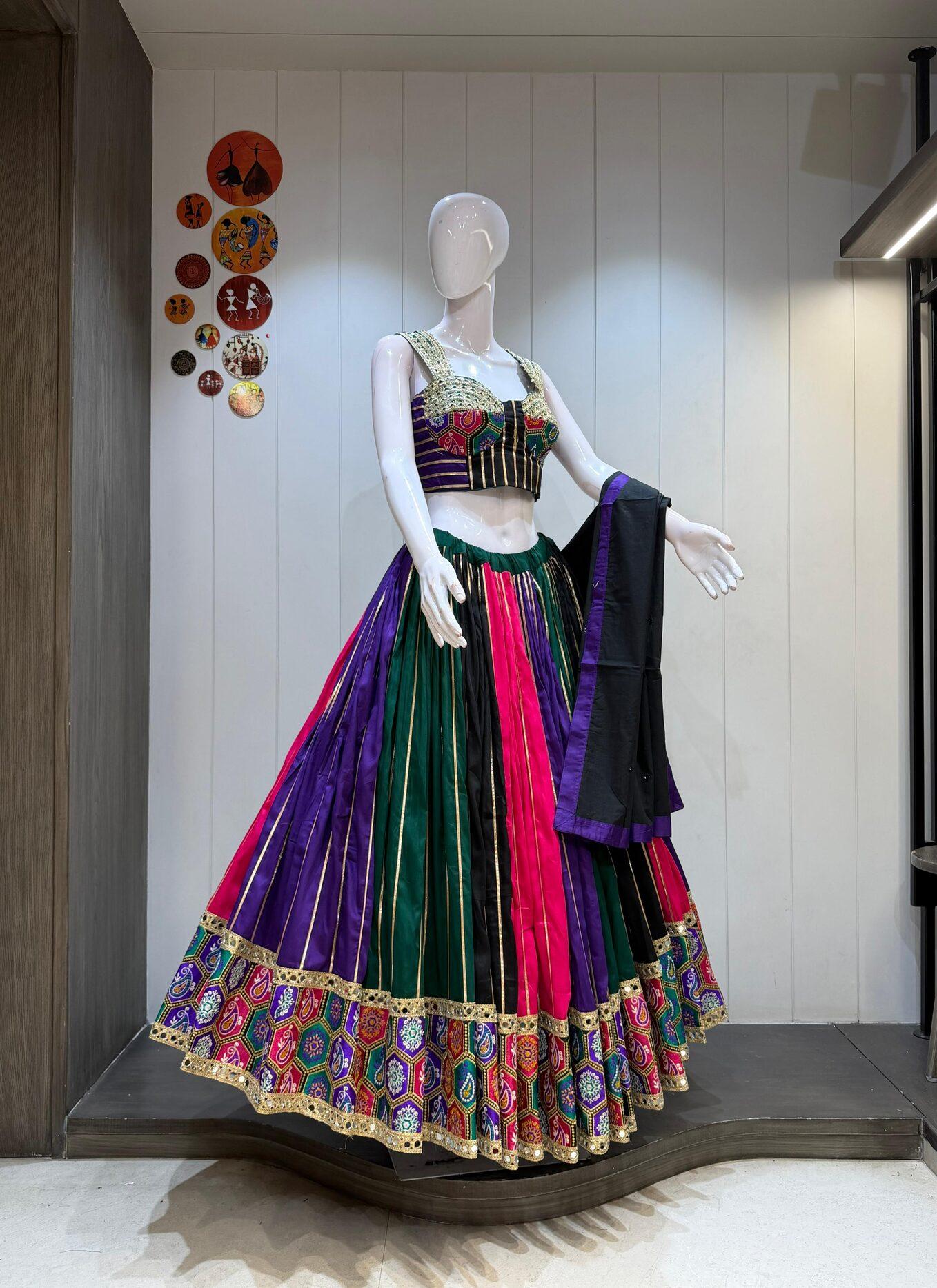
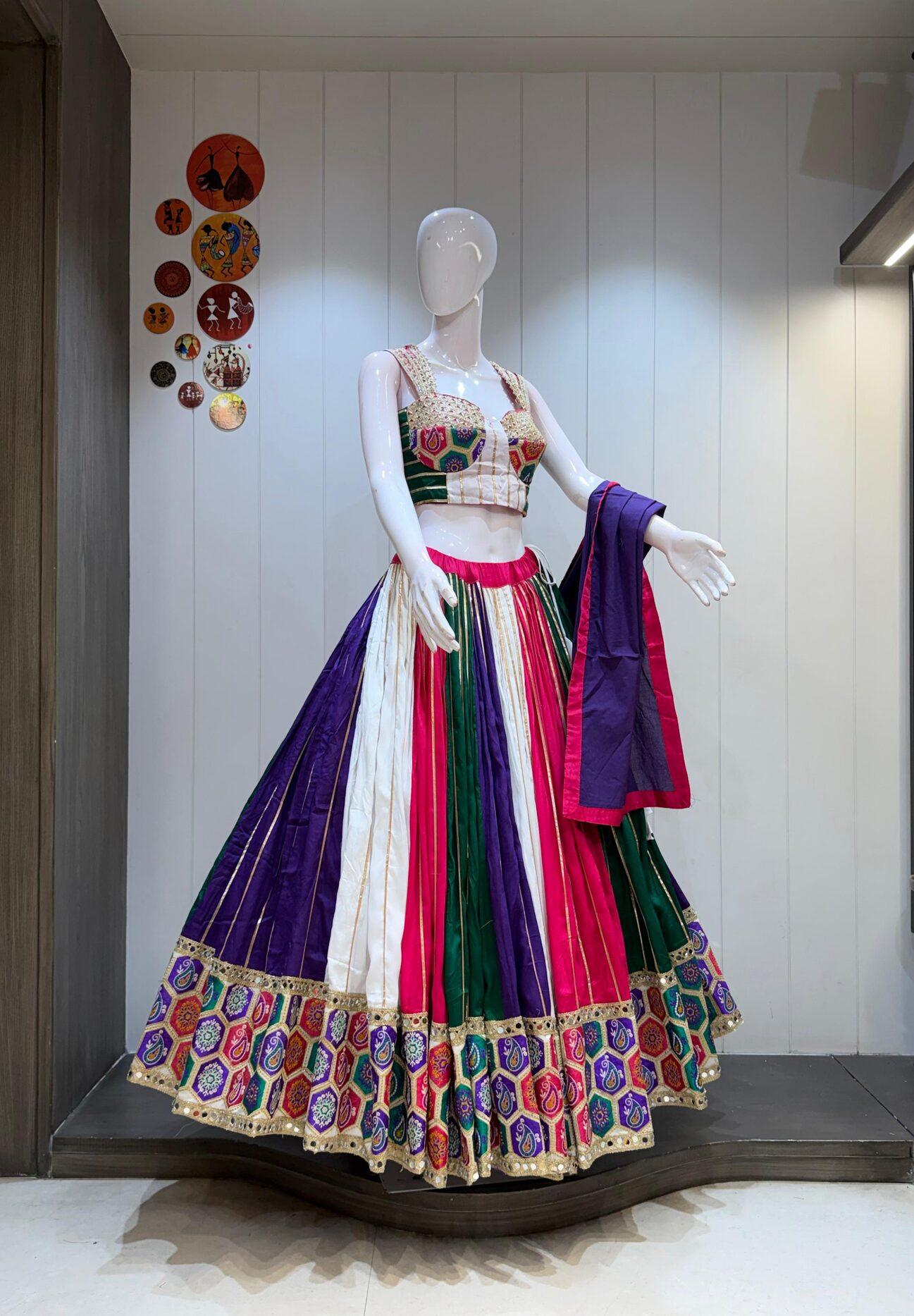
- The gamthi choli: a short, fitted blouse covered in embroidery, often with a tie-back and tassels, worn over a plain or printed chaniya so the blouse does the talking.
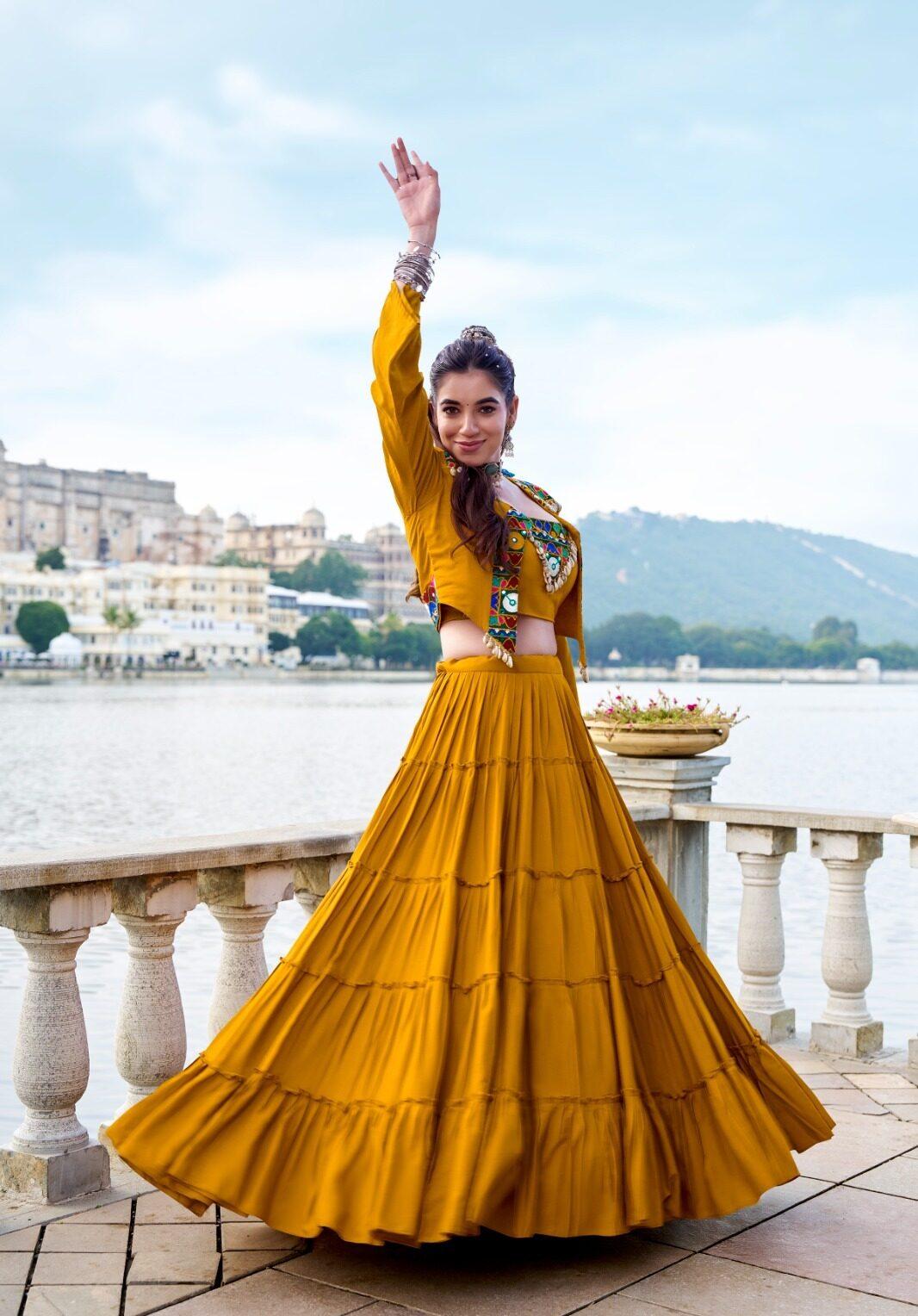
- The gamthi koti: a sleeveless embroidered jacket worn over a plain choli. It is the easiest way into the look, because the koti can be worn over several different sets.
- Borders and patches on a chaniya, and on bags, belts and dupattas.
Why Navratri belongs to it
Garba is a village dance before it is anything else, and the gamthi look is the countryside dressed for a festival. It is also practical: the embroidery is on a small blouse or a jacket rather than a heavy full skirt, so the outfit stays light enough to dance nine nights in.
Choosing one
Look at the density of the work and at the back of the piece, as with any embroidery. Then think about what it will go over. A koti in strong colours with mirrors will work with a plain chaniya in any of its shades, which is why we keep kotis and plain sets that pair with each other on the rail.
Questions people ask
What does gamthi mean?
Gam is Gujarati for village; gamthi means village-made or rustic. In clothing it means the bright, hand-embroidered folk look of rural Saurashtra and Kutch: thread work, mirrors, tassels, strong colours.
What is a gamthi koti?
A sleeveless embroidered jacket worn over a plain choli. It is the easiest way into the gamthi look because one koti works over several different chaniya sets.
Is a gamthi choli good for Garba?
Yes — the embroidery sits on a small blouse or jacket rather than a heavy skirt, so the outfit stays light for nine nights of dancing.