In this story
Quick facts
- Place
- Kutch and Jamnagar, Rajasthan
- Started from
- Over a thousand years; shown in the Ajanta caves
- Made by
- Khatri families
- Worn now as
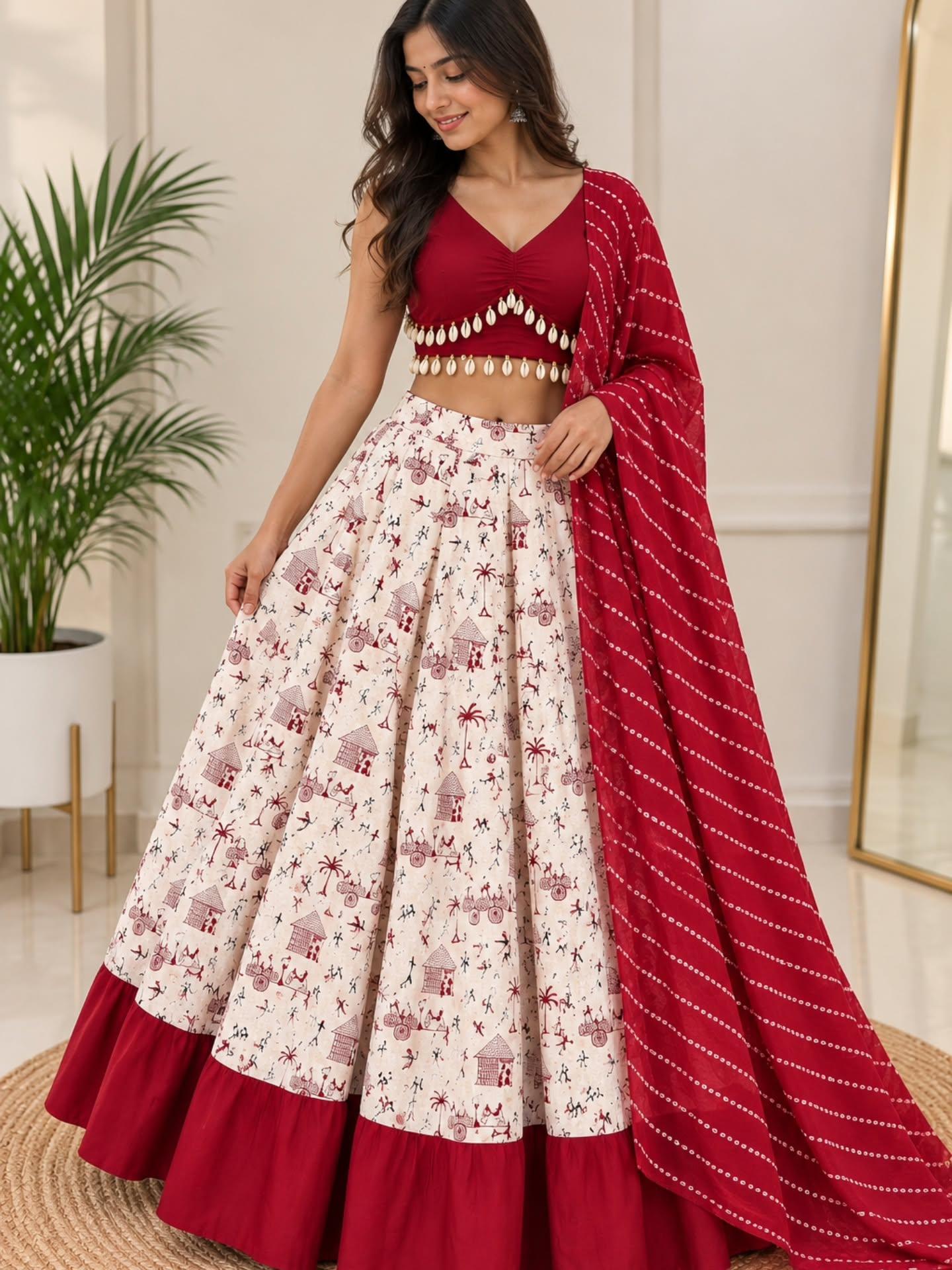
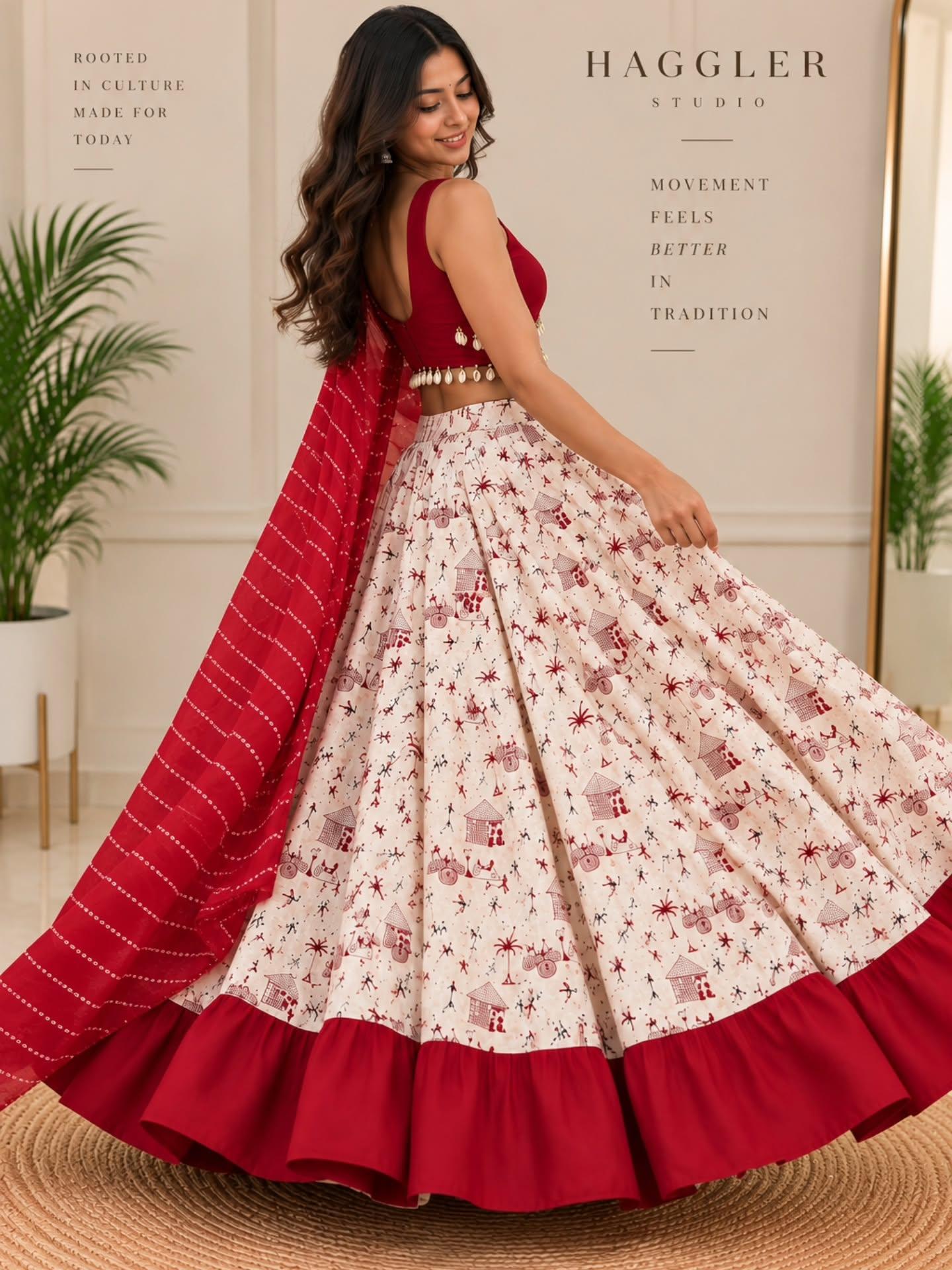
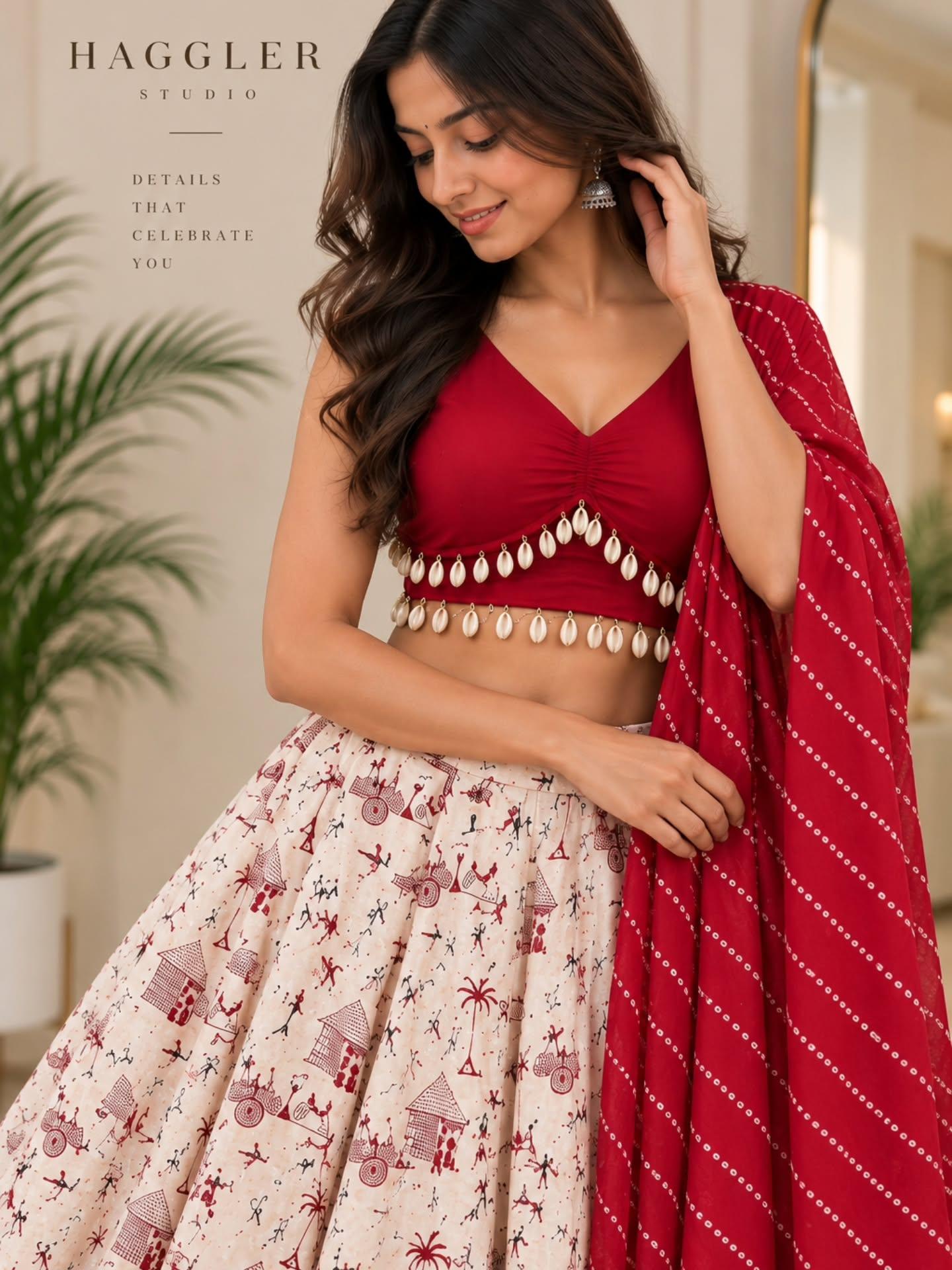
- Bandhani dupattas over plain chaniyas; gharchola for weddings
- tie-dye
- dupatta
- wedding
- gharchola
Bandhani is the dotted tie-dye you see on dupattas, sarees and turbans across Gujarat and Rajasthan. The name comes from bandhna, to tie. In Rajasthan the same cloth is usually called bandhej.
Where it is made
Two Gujarati centres dominate. Kutch — Bhuj, Mandvi and the villages around them — is the home of the finest work, done by Khatri families who have dyed cloth for centuries. Jamnagar, on the Saurashtra coast, is the other; the local story is that its water gives the reds and maroons a brightness nowhere else can match. In Rajasthan the trade centres are Jaipur, Sikar, Jodhpur and Udaipur.
How it is made
The design is first marked on the cloth with a wash-away stamp. Then the tying begins: a worker, almost always a woman, lifts a pinch of cloth with a fingernail or a small pointed tool and binds it tightly with thread. Every dot on the finished cloth is one knot. A simple dupatta has a few hundred; a fine saree can have several thousand and take weeks.
The tied cloth goes into the lightest dye first. The knots resist the colour. For a second colour, more ties are added and the cloth goes into a darker bath, and so on. The cloth is sold with the knots still in, which is why a new bandhani dupatta arrives crumpled and puckered. Pulling the cloth open with a sharp tug breaks the threads and reveals the pattern — and proves it is hand-tied rather than printed.
Patterns to know
- Ek dali: single dots scattered evenly.
- Chandrakala and bavan bagh: dots arranged in moon and garden layouts.
- Shikari: hunting scenes, with animals and riders picked out in dots.
- Gharchola: the Gujarati wedding saree, red bandhani with a grid of gold zari checks.
Real or printed
Printed bandhani exists and is cheaper. The giveaway is perfection: printed dots are identical and evenly spaced, and the cloth arrives flat. Hand-tied dots vary slightly in size, each has a small raised point at its centre where the cloth was pinched, and the cloth has that unmistakable pucker.
Bandhani is done on cotton, georgette, chiffon and gaji silk. Dry-clean the first few times; the dye can run.
Questions people ask
What is bandhani?
A tie-dye technique from Gujarat and Rajasthan. Thousands of tiny points of cloth are tied with thread by hand, then the cloth is dyed; each tie resists the dye and leaves a dot. In Rajasthan it is called bandhej.
How do I know if bandhani is real or printed?
Real bandhani has a small raised point at the centre of each dot where the cloth was pinched, dots that vary slightly in size, and arrives puckered with the knots still in. Printed bandhani is flat with perfectly identical dots.
Where is the best bandhani made?
Kutch (Bhuj and Mandvi) for the finest work and Jamnagar for the brightest reds, both in Gujarat; Jaipur, Sikar and Jodhpur in Rajasthan.
Does bandhani colour run?
It can in the first few washes. Dry-clean the first two or three times, then hand-wash cold and alone.