Gota patti meaning
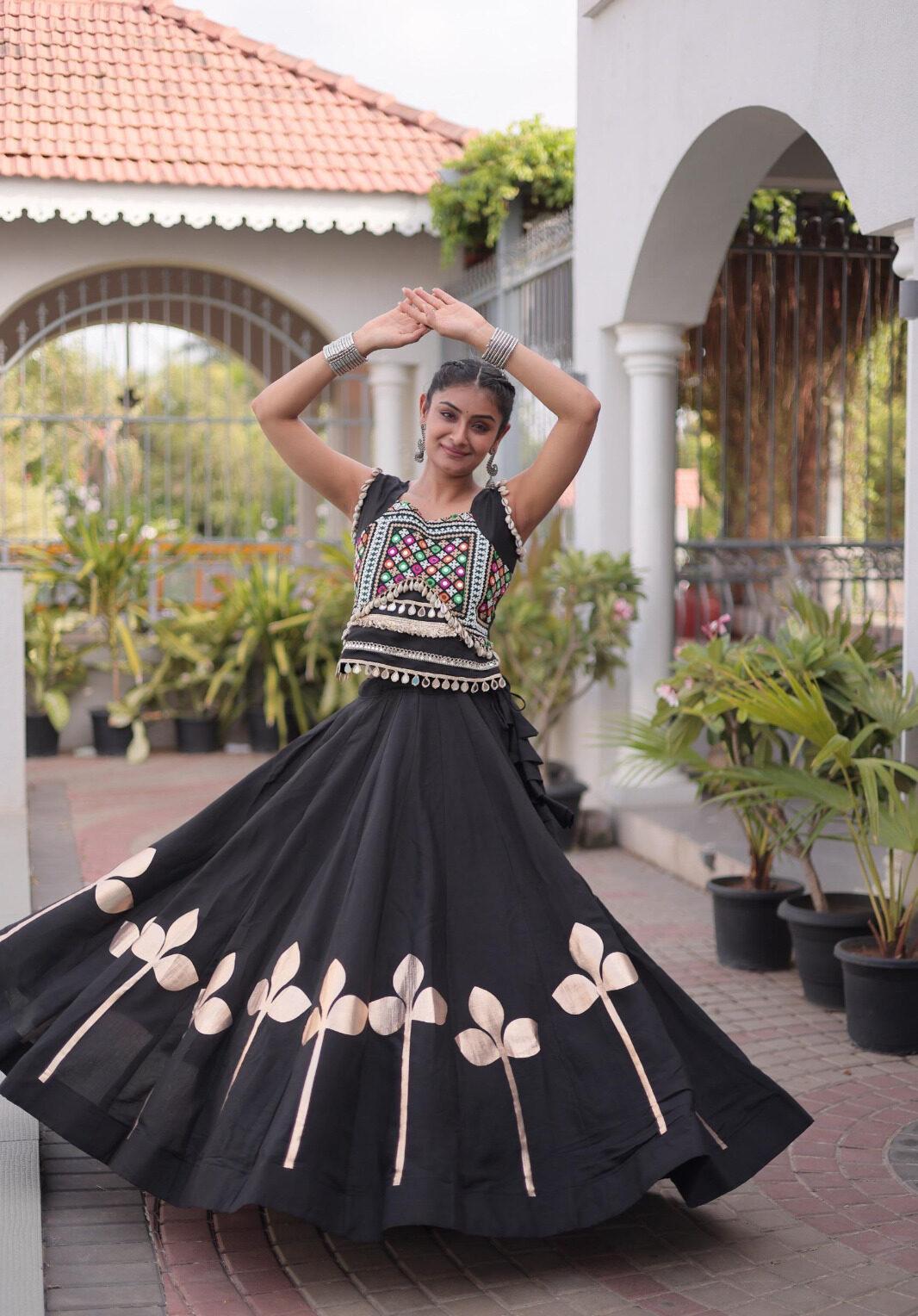
Gota is a thin ribbon woven with shiny gold or silver thread. Patti means a strip. Gota patti work is when this ribbon is folded into small leaves and flowers and stitched onto a chaniya choli, lehenga, saree or dupatta. It comes from Rajasthan, mostly Jaipur, and also Udaipur, Bikaner and Ajmer.
Where gota patti comes from
Gota patti started in the royal courts and in rich homes of Rajasthan. It was used on odhnis (long veils), on the hems of ghagras and on the edges of turbans.
Is gota patti real gold?
Not today. Old gota ribbon was woven from real gold and silver wire around a silk thread. That is why old pieces were often taken apart and melted down. Today gota is made with copper wire or shiny polyester, so it stays bright and does not turn black.
How gota patti work is done
The ribbon is folded again and again into a shape. Most often it is a leaf, so the classic style is called pan-patti (pan means betel leaf). Each folded piece is then stitched onto the fabric with tiny stitches along its edges. The shapes are arranged into vines, flowers and borders. Some pieces also add danka (small stamped metal pieces) or a line of sequins between the leaves.
Because the shapes are made of ribbon and not thick thread, gota patti is light for how much it covers. A chaniya with a full border of leaves still swings when you dance.
Gota patti chaniya choli for Navratri
Gota patti is traditionally done on leheriya and bandhani fabric, and on plain silks in strong colours: black, maroon, green and mustard. A black chaniya choli with cream or gold gota leaves is one of the most Rajasthani things you can wear to Garba. It also looks great in photos, because the metal catches every light.
How to care for gota patti
- Keep perfume, deodorant and hairspray off the gota. They make the metal dull.
- Store it wrapped in muslin cloth or tissue, never in plastic, which traps damp.
- Dry-clean only, and ask for steaming instead of ironing. An iron flattens the folded leaves.
Questions people ask
What is gota patti?
A craft from Rajasthan. A thin metallic ribbon called gota is folded into shapes, most often leaves (called pan-patti), and stitched onto cloth as vines, flowers and borders.
Is gota patti real gold?
Not today. Old gota was woven from real gold or silver wire. Modern gota uses copper wire or shiny polyester, so it stays bright and does not turn black.
Is gota patti heavy?
No. The shapes are made from folded ribbon, not thick thread, so even a full gota border stays light enough to dance in.
How do I care for a gota patti chaniya choli?
Dry-clean only, and ask for steaming instead of ironing. Store it in muslin cloth, not plastic. Keep perfume and hairspray off the gota.
Comments
Be the first to comment on this story.