In this story
Quick facts
- Place
- Jaipur, Jodhpur and Udaipur, Rajasthan
- Started from
- Rajput turban cloth, several centuries old
- Made by
- Dyers of Jaipur and Jodhpur
- Worn now as
- Leheriya dupattas and gota-edged chaniyas
- tie-dye
- stripes
- dupatta
- monsoon
Leher means wave. Leheriya is the Rajasthani cloth with fine diagonal stripes in two or more colours, and the stripes really are made by waves — of cloth, rolled and tied before it goes into the dye.
How it is made
A length of thin cotton, georgette or chiffon is rolled diagonally from one corner into a rope. The rope is tied tightly with thread at intervals, then dyed. Where the thread binds, the dye cannot reach, so when the cloth is unrolled a diagonal stripe appears at each tie. For more colours, the cloth is re-rolled from a different corner and tied and dyed again. When the second set of stripes crosses the first at right angles, the result is a fine check called mothra.
It is a resist technique, a cousin of bandhani, and it is done in the same cities: Jaipur, Jodhpur and Udaipur.
What it was for
Leheriya was first a turban cloth. Rajasthani men wore leheriya safas, with certain stripe colours for certain seasons and occasions, and the diagonal was said to be the pattern of rain across the desert sky. It was — and is — the cloth of the monsoon and of Teej, the festival that welcomes it, when women wear green and yellow leheriya odhnis.
On a chaniya choli
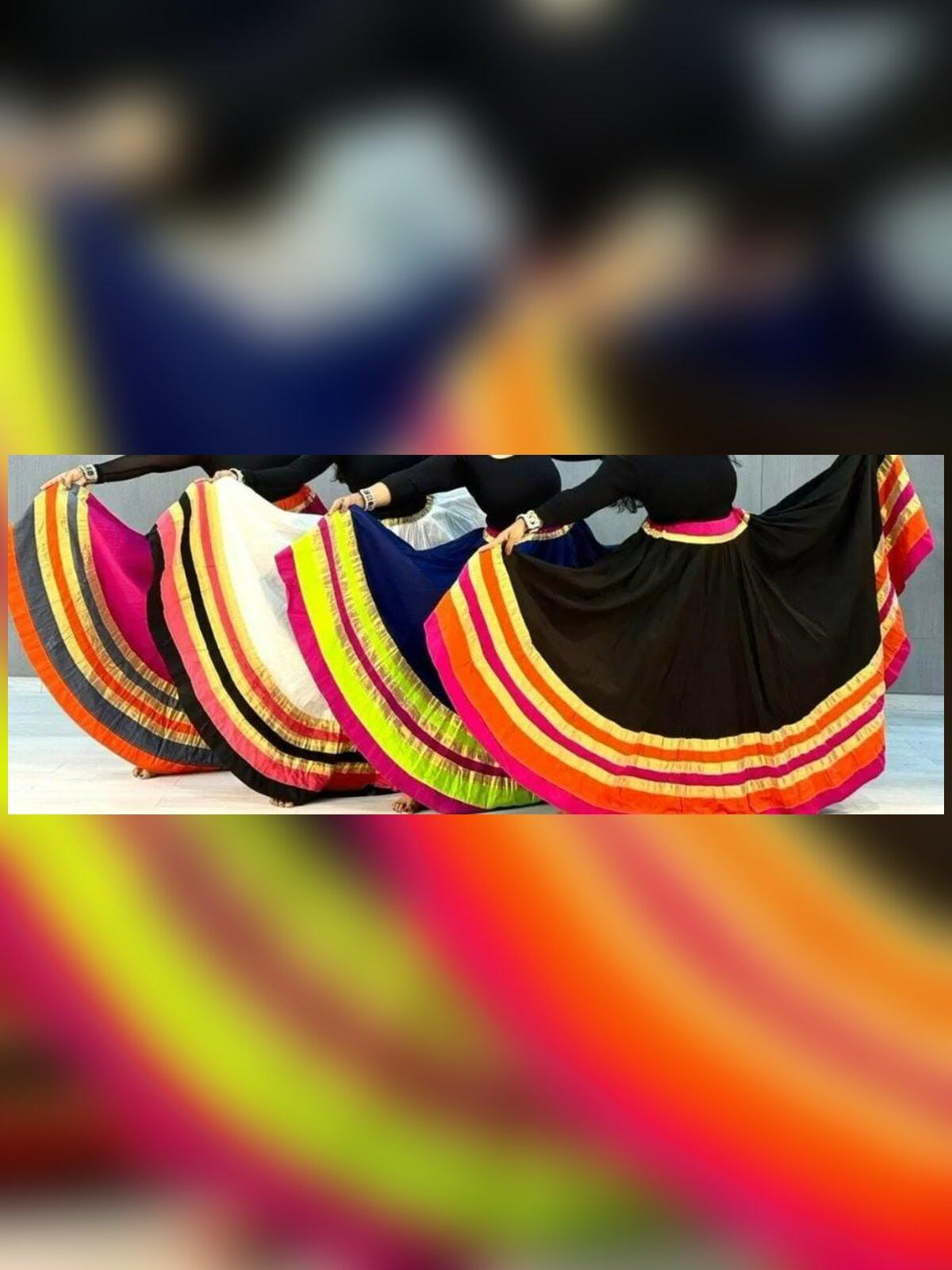
A leheriya dupatta over a plain chaniya is the lightest way to bring Rajasthan into a Navratri outfit, and because the stripes are fine and diagonal they flatter every height. Leheriya is also the traditional base for gota patti, so a leheriya chaniya with gota borders is about as classically Jaipuri as clothing gets.
Real leheriya has a very slight unevenness in its stripes and a softness where the dye bled at the ties. Printed leheriya is razor-straight. Both exist; only one was made by hand.
Questions people ask
What is leheriya?
A Rajasthani resist-dye cloth with fine diagonal stripes. The fabric is rolled diagonally, tied at intervals and dyed; the ties leave undyed stripes. Leher means wave.
What is mothra?
Leheriya dyed twice from opposite corners so the two sets of diagonal stripes cross and form a fine check.
How do I tell real leheriya from printed?
Hand-dyed stripes have a slight waver and soft edges where the dye bled at the ties; printed leheriya is razor-straight and perfectly even.